
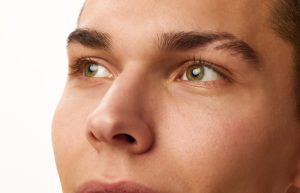
Understanding how the nose is built is the first step in understanding how saddle nose deformity develops. The nose is a complex structure made of bone, cartilage, soft tissue, and internal support systems that must work together for both appearance and breathing. When any of these components weaken or collapse, the bridge of the nose can sink inward, creating the characteristic concave appearance known as saddle nose deformity.
Saddle nose is more than a cosmetic issue — it often affects nasal airflow, valve stability, and overall function. Dr. Maurice Khosh, a double board-certified facial plastic and reconstructive surgeon in New York City, specializes in complex nasal reconstruction and has extensive experience restoring both form and breathing function in patients with saddle nose deformity.
The Basic Structure of the Nose
The nose has three main support regions:
- The Upper Third – Nasal Bones: These rigid bones form the top of the nasal bridge and provide foundational support.
- The Middle Third – Upper Lateral Cartilages: These thin, flexible cartilages shape the bridge and help maintain the internal nasal valves, which are essential for smooth airflow.
- The Lower Third – Lower Lateral (Alar) Cartilages: These shape the nostrils and tip of the nose, controlling projection and symmetry.
- Inside the nose, the septum — a combination of bone and cartilage — divides the nasal passage and serves as a key structural pillar. When the septum is strong, it supports the bridge and maintains valve function.
When any structural support weakens, the bridge can collapse, causing a saddle-like dip.
How Saddle Nose Deformity Occurs
Saddle nose deformity is caused by loss, weakening, or destruction of the cartilage or bone that supports the nasal dorsum (bridge). Several factors may contribute:
- Trauma to the Nose: Injury is one of the most common causes. Nasal fractures, untreated sports injuries, or accidents can crack or weaken the septum. If the damage heals improperly, the bridge may collapse. Research shows that nearly half of nasal fractures involve some level of septal injury, which increases saddle nose risk.
- Septal Surgery Complications: Overly aggressive septoplasty or cartilage removal during rhinoplasty can reduce internal support. If too much cartilage is removed or healing is compromised, the dorsal support weakens and sinks.
- Autoimmune and Inflammatory Disorders: Conditions such as granulomatosis with polyangiitis, relapsing polychondritis, and sarcoidosis can attack cartilage and cause progressive destruction. These disorders are less common but often lead to more severe forms of saddle nose.
- Infection or Cocaine Use: Severe infections or chronic intranasal drug use can damage the septum and surrounding tissues. Cocaine is particularly destructive because it reduces blood flow, leading to cartilage necrosis.
How Structural Collapse Affects Breathing
Saddle nose deformity disrupts airflow in several ways:
- The nasal valves collapse, restricting breathing capacity.
- The septum loses support, causing internal narrowing or obstruction.
- Airflow becomes turbulent, leading to congestion and dryness.
Patients often report chronic mouth breathing, exercise intolerance, and persistent nasal blockage.
Why Reconstruction Requires Expertise
Repairing saddle nose is one of the most intricate procedures in facial plastic surgery. It requires rebuilding the nose’s internal framework using strong graft materials — often cartilage from the patient’s rib or ear. The goal is to restore height, strengthen the nasal valves, and create a stable, natural-looking bridge.
Dr. Maurice Khosh is widely recognized for his skill in complex nasal reconstruction. His experience in both functional and aesthetic nasal surgery allows him to address the internal mechanics of breathing while achieving a natural external shape.
A saddle nose deformity can affect both appearance and quality of life, but with expert reconstruction, patients can regain nasal structure, function, and confidence.
To learn more about saddle nose repair or schedule a consultation, contact Dr. Maurice Khosh in NYC today.


Words can not express my gratitude for his amazing life-changing work.
I had a tonsillectomy and a Neck Lump removal done on the same day.
Everything that you ever heard or read about tonsillectomy, is a dramatic over-exaggeration of people who can NOT tolerate pain.
I was so ready for a long misery and stressful recovery... Pffttt , turned out to be a really easy experience.
Dr. Khosh did an amazing job!!! Also taking in to consideration that I had 2 surgeries performed on the same day. I was out walking my dogs on day 2. Day 3 Walking dogs, doing some shopping and cooking... day 4 5 and 6 you get the picture. 0 limitations, just listened to my body and didnt overwork myself.
Just want to tell anyone and everyone who is either thinking of or NEEDS to have adult tonsillectomy done - Please don't even think twice. You get a perfect dose of painkillers, and they can solve all your pain-needs.
Dr.Khosh has an amazing warm and friendly personality, with a heart of gold and superb skills.
Susan - my comforting shoulder, and Christine - always happy and positive to brighten your day. I am forever grateful .